Small businesses tend to view SEO and PPC strategies as rivals. You choose one over the other depending on your budget and timeframe. Successful brands know that combining SEO with PPC will produce better results than either channel alone.
By aligning organic search with paid advertising, your business can dominate the search results, collect more valuable data, maximize its marketing budget and accelerate growth. This integrated approach has become essential for small businesses that compete in local markets.
This guide will explain how to combine SEO and PPC effectively, what they cost, and why local SEO is the foundation of any strategy.
What are SEO and PPC?
Clarify what each channel is before we explore integration strategies.
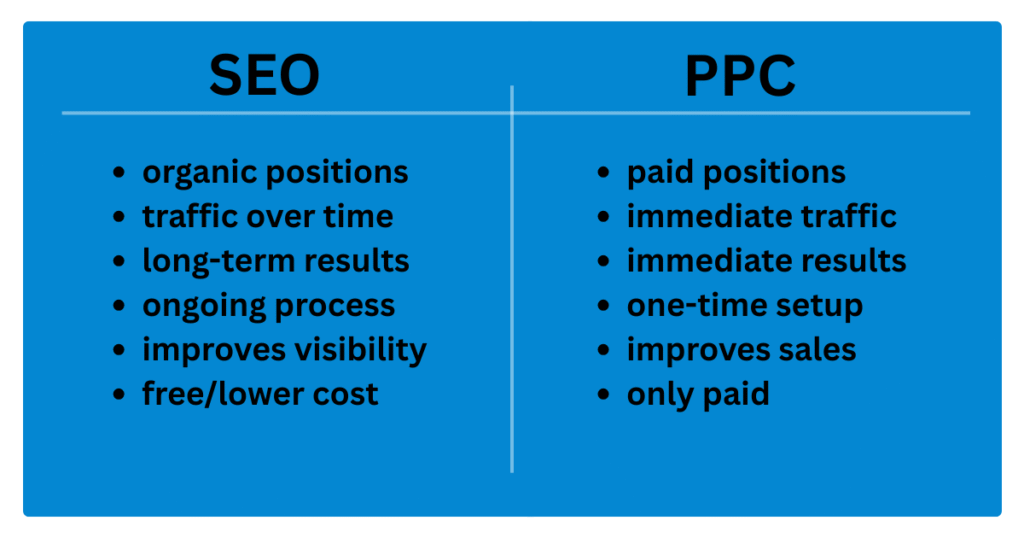
Search Engine Optimization is the process that optimizes your website to appear in organic search engine results. SEO makes your website visible in the non-paid results beneath the ads when someone searches for the services you provide. SEO includes on-page optimization as well as technical improvements, creating content, and building links. The results take some time to appear, but they are worth the wait.
Pay-Per Click Advertising (PPC), also known as pay-per-click advertising, places your company at the top of all search engine results. However, you have to pay every time someone clicks on your ad. Google Ads is a popular PPC platform used by small businesses. You create ads and bid on keywords to appear above organic search results. PPC offers instant traffic with precise targeting. However, it stops working once you stop paying.
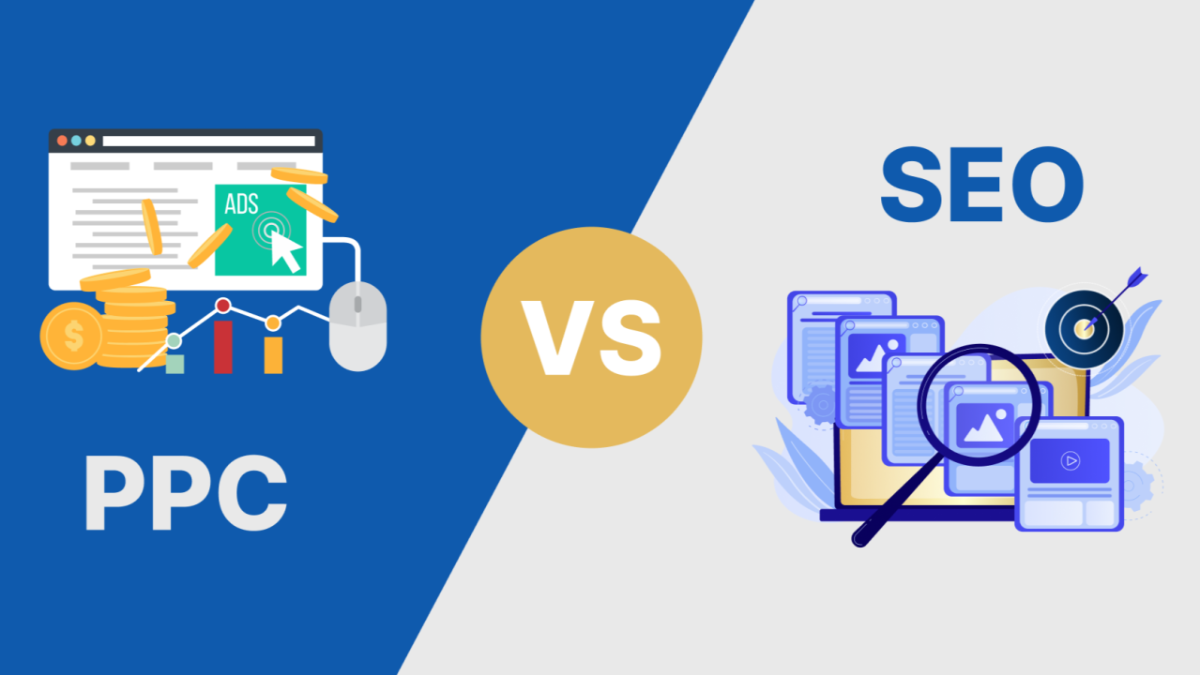
SEO vs. PPC is a debate that misses out on the larger picture. Each channel has its own advantages.
- SEO helps to build long-term authority, credibility and trust.
- PPC provides immediate visibility and rapid test.
- SEO generates traffic “free” after initial investment.
- PPC offers detailed data as well as precise targeting.
- Smart small businesses don’t choose between the two, but rather use them both strategically.
Why SEO and PPC work better together
When integrated properly, SEO and PPC can multiply your marketing efficiency. They complement each other.
-
Maximum Search Visibility
Your total clicks will increase if you appear in both organic and paid results. According to studies, businesses that rank in both sections receive more traffic overall than the sum of all clicks. You can occupy more real estate on the results page and push your competitors lower. Brand recognition is also increased through constant exposure.
-
Get faster data and insights
PPC gives you immediate feedback on which keywords work, which messaging resonates and which landing pages are most effective. You can validate and test strategies with paid campaigns instead of waiting for months to see SEO results. Then, apply these insights to organic optimization. It reduces your SEO investment risk.
-
Keyword Strategy
Paid search data shows the true commercial intent of keywords. You’ll discover the terms that drive sales and not just traffic. This intelligence will help you prioritize the creation of SEO content and save time by avoiding optimizing for non-converting keywords.
-
Better Quality Scores at Lower Costs
Google will reward you with higher PPC quality scores if your organic rankings are strong. A higher Quality Score means lower click costs and better ad placements. Over time, your SEO investment will directly reduce your advertising costs.
-
Retargeting Opportunities
Retargeting is a great way to keep your brand in front of customers. People who have found you organically, but didn’t convert will receive strategically placed ads while they browse other sites. This increases conversion rates significantly.
-
Competitive Dominance
You can take advantage of competitors who focus their efforts on a single channel by taking multiple positions in the search results. This is particularly powerful in local markets, where visibility directly correlates to foot traffic and phone calls.
How to use SEO and PPC together: A step-by-step guide for small businesses
Are you ready to integrate these channels into your business? Follow this practical framework to integrate these channels:
Step 1: Align Your Keyword Strategy
Begin with comprehensive keyword research to serve both channels. Segment high-intent, relevant keywords for your business.
- Keywords with high competition and high value: Target PPC right away while building SEO momentum.
- Keywords with lower competition: Prioritize organic optimization.
- Brand terms: Keep presence both in paid and organic results.
- Local keywords: Focus on both with local SEO packages.
Create a shared list of keywords in a spreadsheet for both your SEO team and PPC team (or agency). These should be updated regularly, based on the performance data of both channels.
Step 2: Test landing pages and messaging using PPC
Validate your strategy with paid campaigns before investing months into content creation. Create several landing pages, each with a different value proposition, call to action, and content structure. Measure conversion rates by running PPC traffic on these pages.
The winning combinations will become your template to create organic landing pages. The testing phase can cost you a few hundred dollars to several thousand dollars, but it will prevent costly mistakes in your SEO strategies.
Step 3: Share data between channels
- Set up a regular schedule for evaluating performance on both channels.
- Weekly: Review which PPC keywords drive conversions and adjust bids.
- Monthly: Analyze PPC data conversions to inform SEO content topics and keywords.
- Quarterly, review how organic ranking impacts PPC costs and channel performance.
Search for keywords that have high conversion rates, but are expensive. These are the best candidates for SEO investments. Track keywords that you rank on page 2 organically. These often benefit from an PPC boost as you improve your organic position.
Step 4: Create Retargeting Campaigns
Create a pixel tracking system on your site to track visitors coming from paid and organic sources. Create segmented retargeting campaigns for:
- Visitors who did not convert but came to the site via organic search
- Blog readers who do not visit service pages
- Cart abandoners and form starters that did not complete the conversion
- Retargeting converts three to ten time more than cold traffic. This makes it the most cost effective way to use your PPC budget.
Step 5: Increase PPC Quality Score through SEO
Google rewards high-quality, relevant experiences with lower costs. It also improves ad placements. Your Quality Score is based on your expected click-through rates, ad relevancy, and landing page experiences.
These factors are directly improved by SEO.
- Landing page experience is improved by mobile-optimized, fast-loading pages (technical search engine optimization).
- Content SEO that is comprehensive and relevant (content SEO) can increase perceived relevance
- Bounce rates are reduced by internal linking and a strong site structure (technical search engine optimization).
- Your PPC campaigns will become more cost effective as your SEO improves the overall quality of your site.
Step 6: Protect your brand terms
Maintain PPC coverage even if your brand is ranked number one organically. You don’t want your prospects to click on competitor ads while searching for your company. Competitors may bid on brand terms. Due to the high quality scores and relevance, brand term PPC can be very cheap.
Step 7: Fill in Gaps Strategically
Weekly monitor your organic rankings. Use PPC to keep your visibility up while SEO takes effect for keywords that you rank close but are not receiving clicks. You can reduce or even eliminate your paid advertising once you have reached the top organic three positions.
- Local SEO: How it fits into your strategy
- Local SEO is a must for small businesses that serve specific geographical areas.
- Local SEO is a way to optimize your website for local searches. This includes:
- Google Business Profile Optimization
- Local directories and citations
- Landing pages specific to a particular location
- Reviews and reputation management
- Local link building
Why local SEO is important for your combined strategy
You can create a powerful geographical dominance when you run both local organic campaigns and location-targeted PPC ads simultaneously. If someone searches “plumbers in Austin” or the “best coffee shops near me”, your business should appear multiple times on different pages of results.
Understanding local SEO cost and pricing
Pricing for local SEO services varies widely depending on the scope and competitiveness of the market. What small businesses usually encounter is:
Basic local SEO packages are available for $500 to $1500 per month. They include Google Business Profile optimization and basic on-page search engine optimization.
Local SEO package: Includes all the basic services, plus review management, content creation, local link building and monthly reporting.
Enterprise Local Solutions: $5,000+ per Month for Multi-location Businesses or Highly Competitive Markets
Consider these factors when evaluating the cost of local SEO:
- Competition in the market (major metros cost more than smaller towns)
- The number of service areas or locations
- Technical issues and current website conditions
- Existing assets and content needs
- Review volume and reputation requirements
Local SEO is most effective for small businesses when combined with PPC, and the ROI ranges from $1,000 to $2500 per month.
Integrating local SEO with PPC
Both channels should be covered by your local strategy
Use location extensions for your PPC ads.
- Create landing pages for specific locations that will serve both organic traffic and paid traffic.
- Try out different local messages in PPC and then use the successful ones for organic content.
- Monitor local ranking weekly and fill in gaps with geotargeted PPC campaign.
- Promote special events and seasonal services using PPC while building up your organic presence.
Budgeting SEO and PPC for Small Businesses
How much should small businesses allocate to each marketing channel? Although every business is unique, the following framework is useful:
Starting Budget Allocation
- Small businesses can start with an integrated SEO/PPC strategy:
- Budget total monthly under $2,000: 60% foundational SEO, including local SEO. 40% PPC testing.
- Budget: $2,000 – $5,000. Split the budget 50/50 between strategic PPC and sustained SEO campaigns.
- Budgets $5,000+: 45% of the budget should be allocated to SEO and 45% for PPC. The remaining 10% can go to testing or new channels.
PPC advertising for small businesses: Costs to consider
PPC costs can vary greatly by industry and geography. Clicks can vary from $1 for low-competition niches up to $50+ per click for high-value service keywords such as legal or financial services.
Small businesses can expect to:
- Minimum $500-$1,000 in advertising per month to collect meaningful data
- – $1000 – $3,000 per month to generate consistent leads in a moderately competitive market.
- – $3,000 – $10,000 per month to achieve aggressive growth on competitive markets
If you are working with an agent, add 15-20% to the management fee.
SEO Investment Timeline
SEO takes time, unlike PPC which offers immediate results.
- Months 1 – 3: Building the foundation (technical fixes and initial optimizations, research).
- Months 4 & 5: Initial ranking improvements and content creation.
- Traffic growth and rankings gains are significant in months 6-12.
- Months 12+: Compounding with authority established.
Before evaluating ROI, budget for at least six consecutive months of SEO investment.
Balance between short and long term
- Combining SEO and PPC allows you to balance immediate needs against long-term growth.
- PPC generates leads instantly while SEO takes time to mature.
- As your organic ranking improves, you can reduce PPC spending.
- Reinvest PPC savings into SEO to accelerate your efforts.
- Keep strategic PPC on high-value keywords, and defend your business against competitors.
Combine SEO with PPC for maximum benefits
You can reap multiple benefits when you implement an integrated SEO and PPC campaign.
Increased Overall ROI
Integration improves the efficiency of both channels, even though each delivers positive results independently. As organic traffic decreases the reliance on PPC clicks and PPC data prevents costly SEO mistakes, your cost per acquisition will drop.
Get Results Faster
PPC generates immediate traffic and leads, while SEO investments build. You don’t have to wait for six months before you see results. You can start generating revenue right away while building long-term assets.
Better Data for Decision Making
The conversion data from PPC campaign informs better SEO investments. You can learn what keywords are most effective, which landing pages convert the best, and which segments of customers deliver the greatest value.
Increased brand trust and recognition
When prospects see you in multiple search results, they perceive your company as being more established and authoritative. This “frequency-effect” builds trust quicker than single-channel visibility.
More Resilient marketing
Relying solely on organic or paid searches creates vulnerabilities. Algorithm changes can destroy SEO-only strategies while budget cuts may eliminate PPC visibility. A multi-source approach ensures stability and traffic.
Customers journey coverage improved
Different customers prefer different paths. Others research and trust organic search results more, while some click on ads instantly. You can capture more prospects by appearing in both.
How to Select the Right Marketing Partner For SEO and PPC
Most small businesses do not have the expertise in-house to effectively manage both channels. Look for the following qualities when evaluating an agency or consultant:
Experience Integrated
Avoid agencies who separate SEO and PPC teams that don’t communicate. Ask about the agency’s process for coordinating strategies and sharing data between channels.
Transparent pricing and reporting
The breakdown of the service costs and ad spending is provided by quality partners. They should provide regular reports that show performance on both channels, and how they interact.
Local Market Knowledge
Prioritize partners who have experience in your local market if you’re a local company. Local SEO is important for small business because it requires an understanding regional competition, search behaviors, and community dynamics.
Strategic Approach
The best partners start with your goals and not tactics. Before recommending channel mix or budget allocation, they should inquire about your revenue goals, customer acquisition costs and competitive landscape.
Realistic Timelines
Be wary of guarantees that you will rank on the first page in 30 days, or of a specific number of visitors. Ethics-driven agencies explain the limitations of SEO and how PPC can help bridge the gap.
Questionnaire for Potential Partners
- How can you combine your SEO and PPC strategies?
- What are some examples of combined campaigns?
- What local SEO services do you offer?
- How do you allocate budget between channels?
- What metrics are you tracking and how often do your reports appear?
- What do you do if a channel is underperforming?
FAQs
Which is better for small business? SEO or PPC?
They both serve different purposes, and they work well together. PPC offers immediate results with precise targeting. It is ideal for short-term campaign and rapid testing. SEO creates long-term traffic and authority. PPC is a good way to generate leads for small businesses, but SEO will compound the returns over time.
How much money should a small company spend on PPC advertising?
For most small businesses, a monthly budget of $1,000-$2,000 is needed to generate leads and gather data. In industries with high competition, $3,000 to $5,000 per month may be needed for a significant impact. Start with a 90-day test budget, track cost per acquisition and then scale your budget based on ROI.
How long does SEO last compared to PPC campaigns?
PPC can deliver results instantly – within hours, your ads could be live. SEO takes about 4-6 months before you see any significant traffic increase and 6-12 month for ranking improvements. Due to this difference in timeline, combining the two strategies is a good idea: PPC will cover your immediate needs and SEO will build lasting assets.
Can SEO reduce PPC over time?
Yes, substantially. You can eliminate or reduce PPC spend on keywords that you rank highly for as your organic ranking improves. Strong SEO also improves PPC Quality Scores and lowers cost per click across all campaigns. PPC effectiveness can increase by 20-40% for most businesses once they have solid organic rankings.
What’s included in the local SEO package for small business?
Local SEO packages include local keyword optimization on the page, link building for local areas, Google Business Profile optimization and review management. Prices range from $1,000 to $3,000 per month, depending on the market and number of locations.
The Path to Integrated Development
SEO and PPC are no longer just nice-to-have strategies for small business – they’re essential to their survival. Each channel has its own value, but their combined power can create exponential returns due to shared data, increased efficiency and complete search visibility.
Businesses that are successful in the digital world of today don’t choose between organic and paid searches. They combine both in a strategic way, using PPC to test and get immediate results, while also building SEO for sustainable, long-term growth. Local SEO is used to dominate geographic markets. Data from both channels are then used to make better marketing decisions.
It is true that managing both channels will require a higher initial investment. The alternative is to rely on only paid clicks that you have to purchase continuously, or wait six months for SEO results as competitors take leads. This costs more in terms of lost opportunities.
It is not a question of whether you can afford SEO and PPC. The question is not whether you can run SEO and PPC together, but if you cannot.
Are you ready to grow faster by combining SEO and PPC? Our integrated marketing strategy combines local SEO services and strategic PPC management tailored specifically for small businesses. We can help you to dominate search results and reduce customer acquisition costs.
Let us create a powerful plan of growth for your small company. Call us today to receive a customized proposal and a complimentary consultation that suits your goals and budget. Now is the time to start your project and discover what’s possible when all search marketing channels are working together.