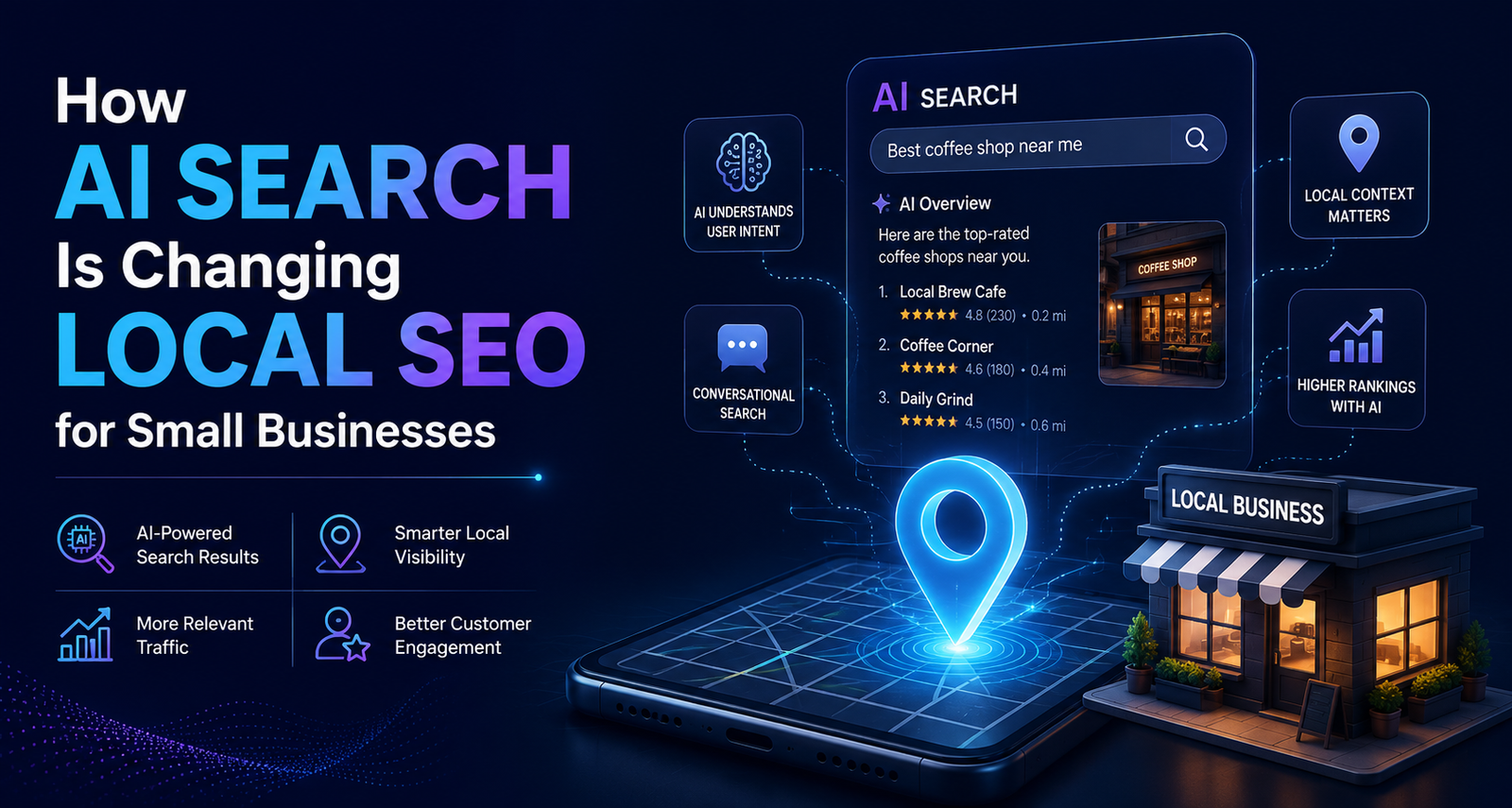
If you own a small business in the United States, you’ve probably noticed something different about how customers find you online. A search for “plumber near me” or “best dentist in [city]” no longer just returns a list of blue links. Instead, it often surfaces an AI-generated summary that answers the question directly, sometimes without the searcher ever clicking through to a website.
This shift is one of the biggest changes to hit local search in years, and it’s rewriting the rules of Local SEO for Small Businesses. Understanding how AI search works, and how to adapt your strategy, is quickly becoming the difference between businesses that get found and businesses that get left behind.
What Is AI Search, and Why Does It Matter for Local Businesses?
AI search refers to tools like Google AI Overviews, ChatGPT, Gemini, and Perplexity that generate direct, conversational answers to search queries instead of simply listing websites. Rather than sending users to your site to find your hours, services, or reviews, these tools now summarize that information right in the results.
For local businesses, this matters because “near me” searches make up a huge share of local intent, and AI is increasingly the layer standing between your business and the customer. When someone asks an AI assistant “who offers the best HVAC repair near me,” the AI pulls its answer from a combination of your Google Business Profile, third-party directories, reviews, and structured content on your website. If that information is thin, outdated, or inconsistent, your business simply won’t make the list.
The Big Shift: From Rankings to Recommendations
Traditional SEO was built around ranking a webpage as high as possible in a list of search results. AI search operates differently. It’s less about ranking and more about being selected as a trustworthy answer. This is often referred to as Answer Engine Optimization (AEO), and it works alongside traditional local SEO rather than replacing it.
Instead of optimizing purely for keywords, AI systems look for clear, structured, and easily verifiable information: your business name, address, and phone number (NAP), your services, your hours, and what real customers say about you. Businesses that make this information easy for AI to find and trust are far more likely to be cited in AI-generated answers, map packs, and voice search results.
Why Small Businesses Can’t Afford to Ignore This
Zero-click searches, where a user gets their answer without visiting a website, now account for a majority of mobile searches. That sounds alarming for traffic, but there’s a silver lining: customers who do click through after seeing an AI summary tend to be further along in their decision-making process. They already know your services, your reputation, and your location. That means higher-intent leads, even if raw click volume declines.
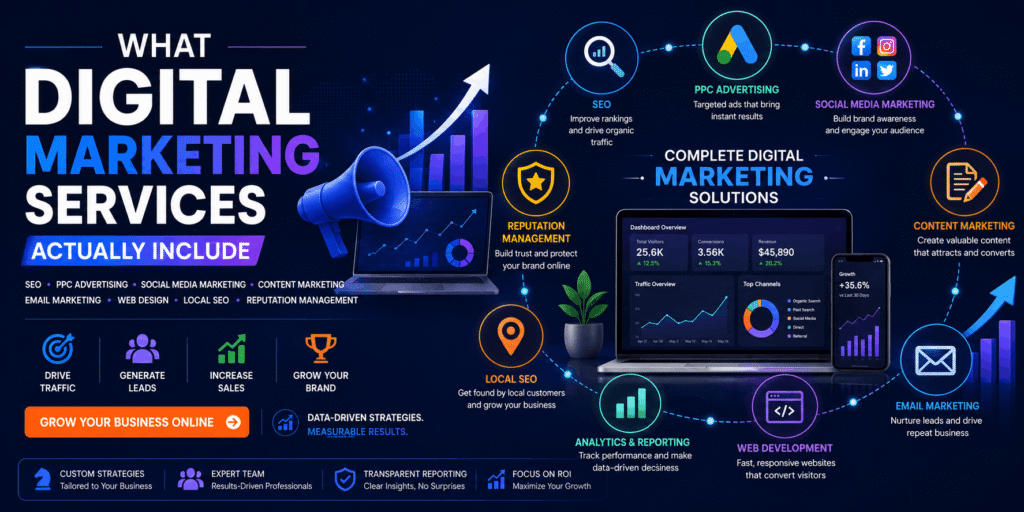
In other words, visibility inside AI search results isn’t optional anymore. It’s becoming the new front door for local discovery, and small businesses that adapt early will have a real competitive advantage over those still relying solely on traditional ranking tactics.
How to Optimize Local SEO for Small Businesses in the AI Search Era
1. Keep Your Google Business Profile Accurate and Active
Your Google Business Profile is one of the most heavily weighted sources AI search tools pull from. Make sure your name, address, phone number, hours, categories, and service areas are complete and consistent. Post updates regularly, add photos, and respond to every review. An active, accurate profile signals legitimacy to both AI systems and human customers.
2. Prioritize Consistent NAP Data Everywhere
AI search tools cross-check your business information across multiple directories, including Yelp, the Better Business Bureau, and industry-specific listings. If your name, address, or phone number doesn’t match across platforms, it creates doubt in the eyes of AI systems, and doubt means you’re less likely to be recommended. Audit your listings regularly and fix any inconsistencies.
3. Build a Strong, Recent Review Profile
Reviews have always mattered for local SEO, but they matter even more now. Research shows AI tools tend to favor businesses with consistently high ratings and active review responses. Encourage happy customers to leave reviews, and respond to all of them, positive or negative, promptly and professionally. Review velocity and response rate are becoming real ranking signals in AI-driven local search.
4. Write Content That Directly Answers Local Questions
AI systems favor content that reads like a clear, natural answer to a real question. Instead of writing generic service pages, structure content around the actual questions your customers ask: “How much does a water heater repair cost in [city]?” or “What should I look for in a local dentist?” Clear, conversational, well-organized content gives AI tools an easy answer to extract and cite.
5. Create Hyperlocal, Community-Focused Content
Going beyond basic service pages helps establish your business as a genuine local authority. Blog about local events, neighborhood guides, or industry-specific advice tied to your city or region. This kind of hyperlocal content is difficult for larger competitors to replicate and gives AI search tools more localized, relevant signals to associate with your business.
6. Use Structured Data and Clear Site Organization
Structured data (schema markup) helps AI systems and search engines understand exactly what your business offers, where you’re located, and what makes you credible. Pair this with a clean site structure, fast load times, and mobile-friendly design, since AI tools favor sites that are easy to crawl and easy to trust.
7. Monitor Your Visibility Across AI Platforms
Local SEO for small businesses now means tracking more than just Google rankings. Periodically search for your own business (and competitors) using tools like ChatGPT, Gemini, and Perplexity to see if and how you’re being mentioned. This kind of visibility check helps you catch gaps before they cost you customers.
The Bottom Line
AI search isn’t replacing local SEO, but it is fundamentally changing what “ranking well” looks like. For small businesses across the USA, success now depends on accurate business data, strong reviews, and content that speaks clearly and directly to real customer questions. The businesses that adapt their Local SEO for Small Businesses strategy to this new AI-driven landscape today will be the ones customers find tomorrow, whether they’re searching on Google, asking a voice assistant, or chatting with an AI tool.
If you’re not sure where your business currently stands in AI search results, a local SEO audit is the best place to start. Small, consistent improvements to your Google Business Profile, reviews, and content can make a measurable difference in how often you show up when it matters most.